Randseed is building the first decentralized, 100% blockchain-based iGames. Our mission is to provide globally accessible and the most player-centric, original iGames and lotteries. We aim to payout 100% of ticket revenue of Instant Win and Draw Games to players on an annual basis.
Enhanced Transparency and Trust: Blockchain's immutable ledger ensures that all transactions, from ticket purchases to draws, are recorded transparently and cannot be altered. Blockchain's decentralized nature makes it resistant to hacking and fraud. Smart contracts can automate various payment functions, reducing the risk of human error or manipulation.
DeFi Integration with Jackpots: Randseed introduces staking into game jackpot, So that players can contribute to the jackpot while earning yields and support growth of the jackpot.
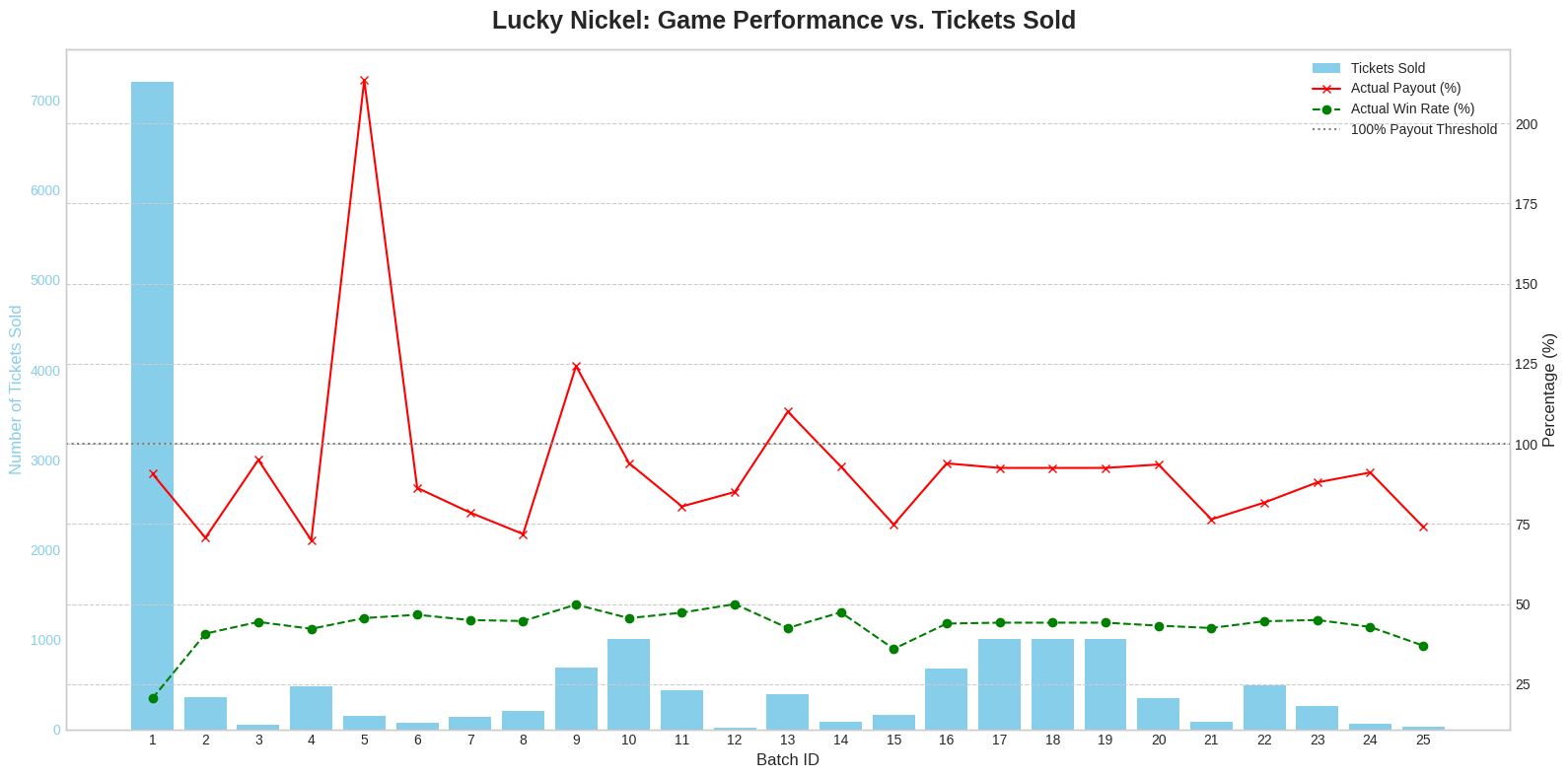
Low Cost Operation: Ensuring a minimum 90% return-to-player rate (actual rate not theoretical rate), maximizing player value. Should this 10% generate a profit, it will be transparently distributed to crypto token holders via smart contract.
DAO: After the token is launched, we are reforming the project to a decentralized autonomous organization, to govern the future of the platform. Token holders will have the power to: 1) Share 100% of the profits. 2) Submit and Vote on Proposals: Directly influence the direction of the platform, including game development and treasury management, ensuring it remains a public good, owned and operated by its community.
Randseed currently offers three original game types: Instant Win Games such as slots, scratch-offs, Peer to Peer Poker Games such as Black Jack, 3 Card Poker and Draw Games such as Daily 4 and Bingo. We plan to expand our offerings to include additional self-branded, multi-chain and Game-as-a-Service (GaaS) for third parties.
Focused User Experience: Crafting Diverse Game Types and Engaging Experiences. This means meticulously designing a wide array of game types, each offering unique challenges, mechanics, and rewards. We believe that variety is key to sustained engagement, and by continually introducing fresh content and innovative gameplay, we can cater to a broad spectrum of player preferences.
Fair and Transparent Business Model: Randseed stands apart from traditional blockchain game platforms by offering a fundamentally different proposition. Unlike casino games, which rely on a 'house edge' model with statistically skewed odds favoring the casino for long-term profit, our game is designed for maximum fairness. Our 100% blockchain foundation ensures clearly defined odds, a provably random draw process, and transparent transactions and funding flows on public ledgers, guaranteeing no hidden advantage for the operator.
A Vast Untapped Potential in Blockchain Lottery: The global lottery market is a $342 billion giant (2023), yet online penetration remains remarkably low at only approx. 4.5% ($15.14 billion in online revenue). This underpenetrated online segment is experiencing rapid growth, with a 7% YoY increase compared to the overall lottery market's 4.1%. This surge, driven largely by younger demographics, signals a unique opportunity for blockchain lottery platforms. By addressing the limitations of traditional and online lotteries through enhanced security, transparency, and global accessibility, World Lottery is strategically positioned to capture substantial market share and meet the growing demand for innovative online lottery experiences.
A Generational Shift Towards Online: The online lottery segment is not only underpenetrated but also experiencing accelerated growth, particularly among younger demographics. While the total lottery market grew at a year-over-year (YoY) rate of 4.1% in 2023, online lottery revenue surged by an impressive 7% YoY. This disparity in growth rates underscores a clear generational shift towards online platforms for lottery participation. Younger players are increasingly drawn to the convenience, accessibility, and innovative features offered by online options.
Issues of existing Online Blockchain Gambling Platforms, Blockchain Lottery Platform, Prediction Platform present significant opportunities for new entrants in the market, particularly those focusing on a transparent and engaging iGaming and Lottery model, which can provide a more streamlined, user-friendly experience.
Online Blockchain iGaming Platforms: Provide a mix of online games, including traditional casino offerings such as slots and table games, alongside lottery options. One notable challenge for these platforms is the lack of transparency. Majority games (typically more than a hundred games) they offer are third party licensed games that are not blockchain native which means these games do not use provable on-chain randomness and can not be traced game income and payout on-chain. Many of these platforms have received substantial negative feedback, particularly concerning their non-transparent gambling experiences. Common complaints include:
- A general lack of transparency in operations
- Lengthy and complicated withdrawal processes
- Ambiguous terms of service (ToS)
- Invasive Know Your Customer (KYC) requirements
- Questionable standard operating procedures (SOPs)
Blockchain Lottery Platforms: Exclusively focus on lottery offerings, devoid of gambling elements. This specialization allows them to cater specifically to lottery enthusiasts. Some notable features that differentiate these platforms include:
- Risk-Free Investment Models: Some platforms such as PoolTogether allow users to withdraw initial deposits anytime. Transforms the lottery from a pure bet into an experience with a safety net.
- Token-Based Jackpots: Prizes are in the platform's native cryptocurrency or other digital assets. Facilitates dynamic jackpot growth, potentially increasing faster than traditional lotteries.
The challenges are also quite apparent:
- Monotonous Game Experiences: Many platforms offer only basic lottery mechanics, lacking diverse modes or engaging interfaces. Leads to player fatigue and declining interest.
- Unsustainable Tokenomics: Inflationary token supplies or over-reliance on new user acquisition can lead to a decline in the platform's native token value, eroding jackpot value and discouraging participation.
Addressing these challenges through innovative game design and robust economic models is crucial for the sustained success of blockchain lottery platforms.
Prediction Market Platforms: Facilitate prediction markets, where users can place bets on the outcomes of future events. Companies like Polymarket exemplify this model, allowing users to trade on event outcomes, which can include political elections, sports results, and other major happenings. Key characteristics of this group include:
- Market-Driven Predictions: Users engage in a form of gambling where they can predict outcomes, creating a dynamic market that reflects collective beliefs about future events.
- Decentralization and Transparency: Many prediction market platforms leverage blockchain technology to ensure transparency in operations and the integrity of transactions.
These platforms often attract users interested in speculative investment, which can differ significantly from iGaming and lottery participation.
The WL token ($WLT) possesses a multifaceted tokenomics structure designed to reward holders and execute community governance. After becoming a standard SPL (Solana Program Library) token on the open market, $WLT is deeply correlated with the platform’s revenue and assets yields.
Supply and Distribution:
The $WLT token had a maximum supply of 1 billion tokens. A key aspect of its launch was the "fair launch" approach, where tokens were launched at $0 on Memecoin platform, aiming to bootstrap community growth and reward early adopters.
Core Utility and Demand Drivers - Stake and Play: Holders of $WLT, can stake to earn a share of the platform's revenue, which is distributed in gaming coins (fixed conversion rate to stable coins).
- Platform Governance: $WLT holders can participate in governance proposals through votes.
A significant portion of the repurchased $WLT is subsequently locked. This locked amount is then redistributed through mechanisms such as token splits and initiatives for community growth. The Buyback Program directly connects the platform's success to a reduction in the token's supply, with the goal of increasing the value of the remaining tokens over time.
A critical component of $WLT tokenomics is its aggressive deflationary mechanism. Randseed has implemented a “Buyback” program where a portion of the revenue and incremental assets generated from its core services are used to buy back $WLT from the open market.
The funds contributing to the buyback include:
- Profit: up to 100% of platform profit depending on the market cap of $WLT
- Assets: Up to 5% of new assets, which do not include staking and yields that are paid to stakers. This percentage is calculated on the total assets in the platform's fund pool (e.g., Jackpot reserve and game coins) that exceed the previous high water mark.